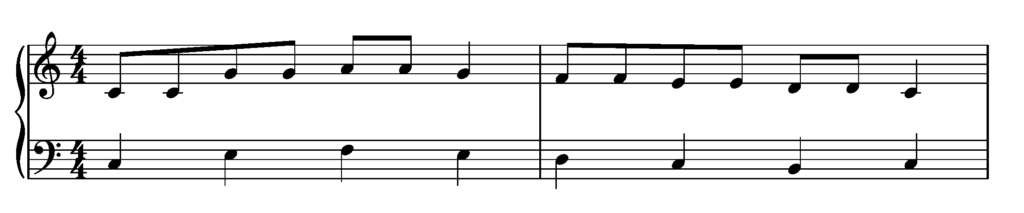
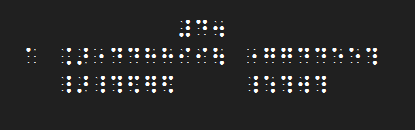
Music braille is a unique, logical system that allows blind and visually impaired musicians to read, write, and study music notation independently. Unlike standard print music, which uses a two-dimensional spatial layout (with symbols placed on a five-line staff), music braille is linear. It uses the exact same six-dot braille cell as the literary code, but assigns entirely new musical meanings to the various dot combinations.

Because it is a linear system, a music braille score reads from left to right, line by line, much like text in a book. The system relies on a series of specific signs to convey all aspects of a score, including pitches, rhythmic values, octaves, key signatures, dynamics, and expression marks. This ensures that a blind musician has access to the exact same detailed information as a sighted musician looking at a print staff.
Learning Music Braille
Prerequisite: It is strongly suggested to first learn the Literary Braille Code before attempting to learn music braille. The Literary Braille Code consists of two major divisions: Uncontracted (Grade 1) and Contracted (Grade 2). Because Contracted Braille uses specific language-based short-forms, Uncontracted Literary Braille is primarily used within music scores to eliminate language variations and prevent symbol conflicts.
Foundational Resource: For those who need to learn or brush up on literary braille, Hadley offers excellent, free online courses in Literary Braille via their website at hadleyhelps.org. (Note: While Hadley previously offered specific Music Braille courses, they have discontinued that instructional service. However, the excellent textbooks they developed remain standard in the field and can still be borrowed).
Online Training Courses
- Title: Braille Music Notation Introductory Training
- Platform: UEB Online (Presented by NextSense and the Macquarie University School of Education, Australia)
- Access Link: UEB Online Website
- Availability: Free access to all online modules; an optional official Certificate of Completion is available for a $35 AUD fee.
- Note: This is a self-paced interactive course consisting of 11 sequential modules. It is hosted entirely in your web browser and is designed for sighted educators, parents, and braille learners who want a structured, automated way to learn and practice the fundamentals of Unified English Braille (UEB) music notation.
- Title: Distance Learning Braille Music Course
- Platform: Miami Lighthouse for the Blind and Visually Impaired
- Access Link: Miami Lighthouse Music Braille Online Course
- Availability: $300 tuition fee (as of September 2025). Designed for independent distance learning with off-site instructor support.
- Note: This consists of 26 structured lessons (roughly 45 minutes each) developed by Jin Ho Choi, a Library of Congress-certified braillist. Unlike entirely automated self-study options, it features direct interaction and assessment from a braille music instructor.
- Prerequisite: Fluency in Grade 2 UEB Literary Braille.
Core Handbooks & Manuals
- Title: Music Braille Code (2015)
- Publisher: Braille Authority of North America (BANA)
- Access Link: BANA Music Braille Code Page
- Availability: Free digital access. Available for direct download in both PDF and BRF (Braille Ready Format) files.
- Note: The official, authoritative standard manual for formatting and transcribing music braille in North America.
- Title: Introduction to Braille Music Transcription, Third Edition
- Author/Editors: Mary Turner DeGarmo; revised and edited by Karen Gearreald, Christina Davidson, Kathleen Cantrell, and John Hanson
- Publisher: National Library Service for the Blind and Print Disabled (NLS), Library of Congress
- Access Link: NFB Transcriber Certification Courses
- Availability: Free digital access. Available through the National Federation of the Blind (NFB) transcriber certification platform and the NLS catalog.
- Note: This is the definitive, gold-standard manual used for the official Library of Congress braille music transcriber certification program. While primarily designed for transcribers, it serves as an incredibly thorough reference manual for advanced self-study students who want to master the complex structural rules of professional score formatting.
Foundational Textbooks and Books
- Title: Braille Music Basics
- Author: Ruth Rozen (Prepared by the Staff and Faculty of the Hadley Institute)
- Contributors: Maki Wiering, Lester Jacobson, and others
- Publisher: Hadley Institute for the Blind and Visually Impaired (Winnetka, IL), 2012 (Revised Edition: Nov. 2018)
- Availability: Available via the National Library Service (NLS) for the Blind and Print Disabled.
- NLS Book Numbers: BRM37001 (Braille Edition) | LPM00900 (Large Print Edition)
- Note: This text functions as an entry-level primer and is perfect for students, sighted music teachers, or parents who want a straightforward, foundational overview of how the music code works before diving into more comprehensive reading courses.
- Title: Who’s Afraid of Braille Music? A Short Introduction and Resource Handbook for Parents and Students
- Author: Richard Taesch and William McCann
- Publisher: Dancing Dots Braille Music Technology (Valley Forge, PA), ©2003
- Availability: Available via the National Library Service (NLS) for the Blind and Print Disabled, and directly through the publisher, Dancing Dots.
- NLS Book Numbers: BRM32949 (Braille Edition) | LPM00660 (Large Print Edition)
- Note: This is an engaging and highly encouraging text aimed specifically at demystifying the braille music code. Co-authored by Bill McCann (the founder of Dancing Dots), it is an excellent introductory read for parents of blind children, adult self-study students, and sighted music educators who want to overcome the initial intimidation of the code.
Step-by-Step Reading Courses
- Title: Braille Music Reading
- Author: Ruth Rozen (Prepared by the Staff and Faculty of the Hadley Institute)
- Publisher: Hadley Institute for the Blind and Visually Impaired (2012)
- Availability: Available via the National Library Service (NLS) for the Blind and Print Disabled.
- NLS Book Numbers: BRM37002 (Braille Edition) | LPM00901 (Large Print Edition)
- Note: This foundational book serves as an excellent starting point for independent learners. It systematically guides students through the basic characters, literary-to-music crossovers, and structural rules of the braille music code, making it highly recommended for initial self-study.
- Title: Braille Music Reading: Keyboard Music
- Author: Ruth Rozen (Prepared by the Staff and Faculty of the Hadley Institute)
- Publisher: Hadley Institute for the Blind and Visually Impaired
- Availability: Available via the National Library Service (NLS) for the Blind and Print Disabled.
- NLS Book Numbers: BRM37003 (Braille Edition) | LPM00902 (Large Print Edition)
- Note: An extension course following Braille Music Reading, this specific volume focuses heavily on applied keyboard scores. Like the main primer, it is available to registered NLS patrons and is an excellent next step for self-study pianists and keyboardists transitioning into reading standard multi-line scores.
- Title: An Introduction to Music for the Blind Student, Part 1: A Course in Braille Music Reading
- Author: Richard Taesch
- Publisher: Dancing Dots (Valley Forge, PA), ©2000
- Availability: Available via the National Library Service (NLS) for the Blind and Print Disabled, and directly through the publisher, Dancing Dots.
- NLS Book Numbers: BRM34079 (Braille Edition) | LPM00662 (Large Print Edition)
- Note: This is a cornerstone text for self-study. Published by Dancing Dots, a major champion of accessible music technology, this course is specifically designed to teach the fundamentals of the braille music code alongside basic music theory, making it ideal for absolute beginners.
- Title: An Introduction to Music for the Blind Student, Part 2: A Course in Braille Music Reading
- Author: Richard Taesch
- Publisher: Dancing Dots (Valley Forge, PA), ©2000
- Availability: Available via the National Library Service (NLS) for the Blind and Print Disabled, and directly through the publisher, Dancing Dots.
- NLS Book Numbers: BRM34080 (Braille Edition) | LPM00664 (Large Print Edition)
- Note: Part 2 continues directly from the fundamentals taught in the first volume, diving deeper into advanced musical structures and rhythmic configurations. It is highly recommended to complete Part 1 before moving on to this text.